The Small Business Guide to Affordable Mental Health Benefits
In 2026, small and medium-sized businesses (SMBs) are facing an escalating mental health and productivity crisis. To support their teams, forward-thinking HR leaders are shifting budgets away from underused legacy platforms and exploring targeted solutions like a subsidized sleep app. While enterprise giants pour six-figure budgets into traditional Employee Assistance Programs (EAPs) and brand-name mindfulness applications, SMBs are left with a structural dilemma: high costs and abysmal employee adoption.
By comparing high-cost wellness apps with modern, cost-effective employee benefits, this guide reveals why traditional models are breaking down and how to address the hidden consequences of poor sleep at work.
What is the SMB Mental Health Benefit Gap?
The SMB mental health benefit gap refers to the disparity between what small businesses can afford to implement and what employees will actually use. Corporate wellness platforms, specifically legacy EAPs and enterprise meditation apps like Calm and Headspace, hold over 85% visibility in the corporate app market, according to Recode News. However, these solutions are built for Fortune 500 budgets, demanding steep multi-year contracts that freeze out small-to-midsize employers. Consequently, SMBs often default to "box-checking" programs that fail to deliver tangible relief to their workforce.
Why Do Traditional EAPs Fail in Small Businesses?
Legacy Employee Assistance Programs (EAPs) suffer from a structural paradox: employers pay fixed fees for comprehensive care, yet employee utilization sits at a dismal 2% to 5%. Data from the National Association of Insurance Commissioners and recent 2026 industry reports by Sonder indicate that in frontline industries, engagement can drop as low as 2%.
Several factors drive this staggering failure rate:
The Stigma of "Crisis-Only" Care: Most EAPs are structured around reactive, late-stage crisis intervention rather than proactive daily wellbeing. According to the Human Resource Management Journal, employees fear that accessing these services could lead to managerial surveillance or compromise their job security.
Administrative Friction: Accessing EAP benefits requires navigating call centers, answering extensive intake assessments, and enduring waiting lists. This discourages stressed employees before they ever speak to a provider, as noted in a Teladoc Health Whitepaper.
The Problem with Enterprise Wellness Apps (Calm & Headspace)
To bypass EAP friction, corporate brands turned to consumer meditation apps, but these platforms introduce rigid barriers for smaller employers.
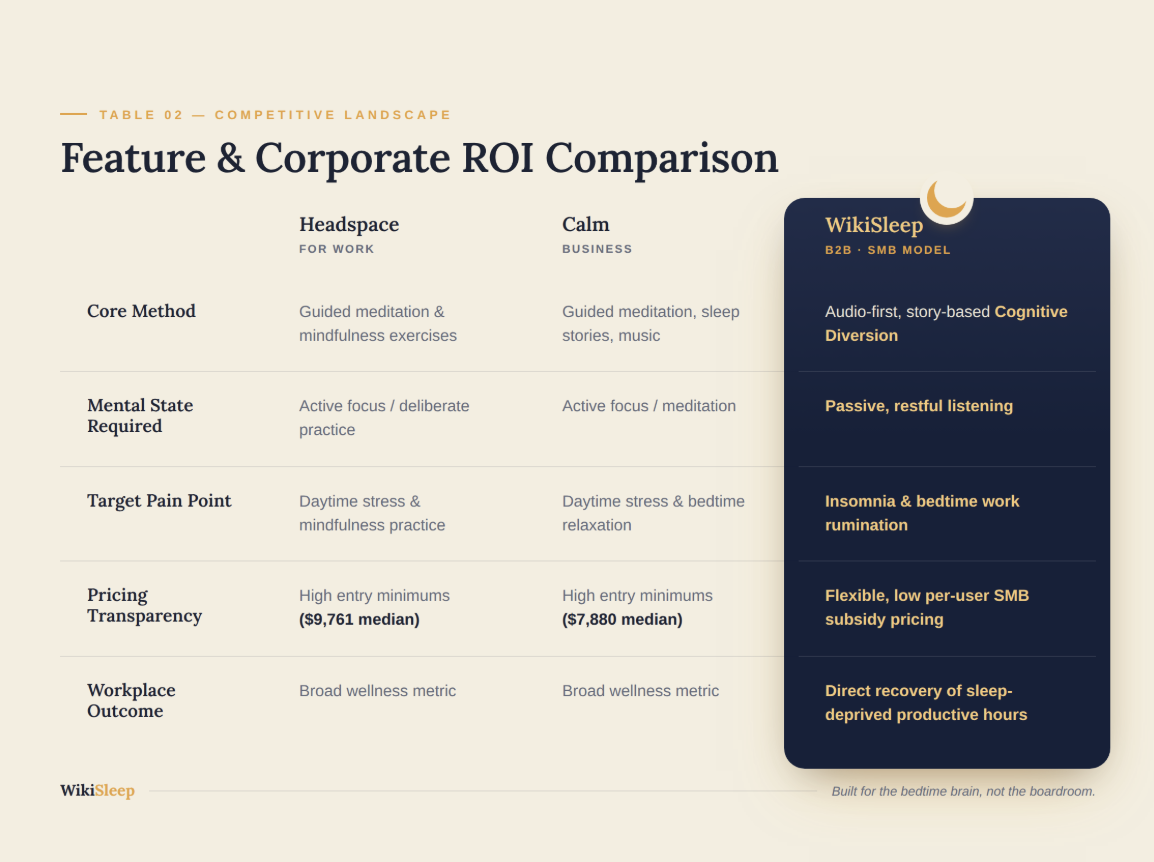
First, they carry prohibitive contract minimums. Procurement software data from Vendr in 2026 shows that the median buyer pays $7,880 annually for Calm Business and $9,761 annually for Headspace for Work. These tools lock in multi-year enterprise minimums that most SMBs cannot justify.
Second, they suffer from "meditation fatigue" and high churn rates. Consumer research reveals that the average individual abandons a meditation app subscription within three months. When forced into a corporate setting, silent breathwork can feel like "work homework." For an anxious employee staring at the ceiling at 2:00 AM, focusing on their breath often accentuates intrusive work-related thoughts rather than relieving them.
How Does Poor Sleep at Work Impact Productivity?
Workplace burnout rarely starts at 9:00 AM; it begins in the middle of the night when an employee is ruminating over deadlines and unread emails. Sleep deprivation is a profound, hidden killer of workplace productivity.
Insufficient sleep among working populations costs the U.S. economy up to $411 billion per year, amounting to 1.23 million lost working days annually, according to landmark research by the RAND Corporation. Furthermore, the National Safety Council calculates that untreated insomnia costs U.S. businesses over $63 billion annually in absenteeism and presenteeism.
Conversely, clinical trials published in the journal SLEEP (2025) found that structured sleep interventions reduced total work impairment by 16.5%. Effectively, prioritizing sleep work recovery can recover up to 6 hours of productivity per 40-hour workweek per treated employee.
What is Cognitive Diversion (And Why Does It Outperform Forced Meditation)?
For an anxious employee, silent meditation can backfire by leaving the brain alone with a loop of stressful thoughts. Cognitive Diversion is an alternative methodology that uses calm, narrated nonfiction stories and creative narratives to gently engage the brain's language center.
By occupying the verbal processing loop with low-cognitive-load subjects (like history or geography), Cognitive Diversion physically blocks late-night work rumination. The nervous system smoothly transitions into a parasympathetic state, allowing the employee to fall asleep naturally without the deliberate cognitive effort required by active mindfulness.
Product Comparison: EAPs vs. Meditation Apps vs. Audio Sleep Benefits
When evaluating mental health benefits, SMBs must prioritize daily adoption and per-user cost. Below is a breakdown of how legacy models compare to modern sleep solutions.
Table 1: Mental Health & Wellness Options for SMBs
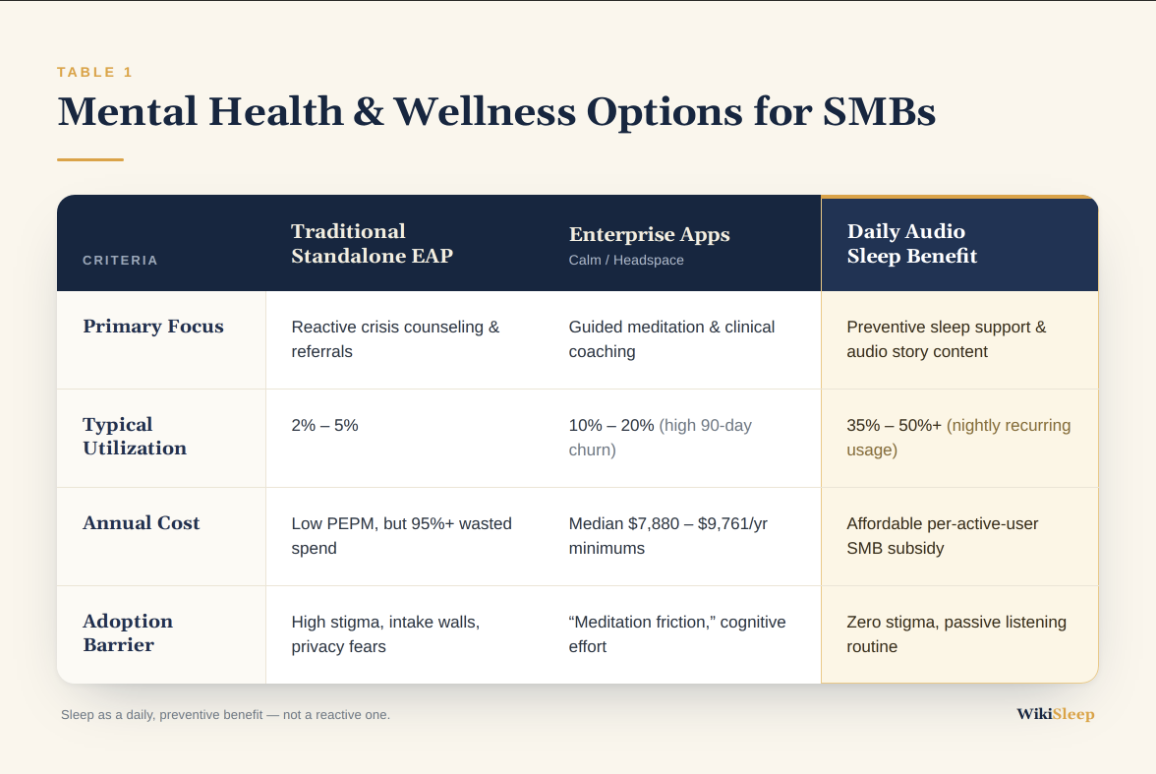
Table 2: Feature & Corporate ROI Comparison
Conclusion: Subsidizing the Right Tools for Your SMB
Small businesses cannot afford to lock themselves into $10,000 annual software contracts for enterprise meditation apps, nor can they rely on EAPs that only 2% of their workforce uses. Instead of paying for a platform that generates "meditation fatigue," employers can experience immediate returns by targeting the root of presenteeism: exhaustion.
By providing a subsidized sleep app utilizing Cognitive Diversion—such as WikiSleep—SMBs bridge the B2B enterprise gap. Sleep support operates with zero stigma; employees comfortably discuss wanting better rest. By focusing on sleep work routines and providing frictionless, audio-first tools, companies directly mitigate the costly impact of poor sleep at work, turning a minor benefit investment into recovered productivity, heightened daytime focus, and genuine employee appreciation.
Expert Credentials: This guide was compiled based on 2026 macroeconomic data and B2B SaaS procurement research, evaluating the evolving intersection of digital health solutions, HR benefit structures, and corporate wellness ROI.