The Natural Alternative to Sleep Aids: Why WikiSleep Delivers Deeper Rest Without Morning Fog or Melatonin
For millions of adults seeking to achieve sound sleep, the default response has long been a trip to the pharmacy. However, clinical sleep science in 2026 is rapidly shifting away from over-the-counter supplements and pharmaceutical hypnotics. While nearly 29% of Americans regularly use supplements to help sleep, research increasingly highlights the biological costs of these chemical interventions, ranging from receptor desensitization and disrupted sleep architecture to severe next-day grogginess.
Rather than forcing sedation through exogenous chemicals, modern sleep therapy targets the actual neurobiological root cause of insomnia: pre-sleep cognitive hyperarousal. By utilizing behavioral interventions like cognitive diversion, individuals can naturally downregulate an overactive nervous system and shepherd the brain into deep sleep without the lingering effects of a pharmacological hangover.
What is Cognitive Hyperarousal?
Cognitive hyperarousal is the involuntary activation of the brain's Default Mode Network (DMN) combined with intrusive, analytical rumination at bedtime. It is the primary driver of sleep-onset insomnia. Insomnia is rarely caused by a physical inability to be tired; instead, it is a neurobiological response to perceived stress.
When external audiovisual inputs cease in a dark bedroom, the DMN—comprising the medial prefrontal cortex and posterior cingulate cortex—ignites. Left unchecked, it begins processing past events, planning for the future, and generating anxiety. According to an analysis of sleep behaviors by WikiSleep, this analytical effort signals the brain's Sleep Onset Control System (SOCS) that there is an active threat, causing the sympathetic nervous system to elevate cortisol and heart rate.
Attempting to force sleep in this state triggers the "Sleep Effort Paradox" or Ironic Process Theory. The more effort applied to falling asleep in silence, the more vigilant the brain becomes. As noted in a behavioral sleep analysis, trying to suppress thoughts in a silent room creates a sleep-incompatible state.
Why Melatonin and Sleeping Pills Fall Short
The Problem with Exogenous Melatonin
Melatonin is highly effective as a chronobiotic phase-shifter to adjust circadian rhythms, but it is a remarkably poor hypnotic sedative for chronic insomnia. Despite 64% of U.S. adults having used melatonin, clinical meta-analyses cited by the Merck Manual Professional Edition reveal it decreases sleep onset latency by an average of only 7 minutes.
Chronic use of commercial melatonin also introduces significant biological friction:
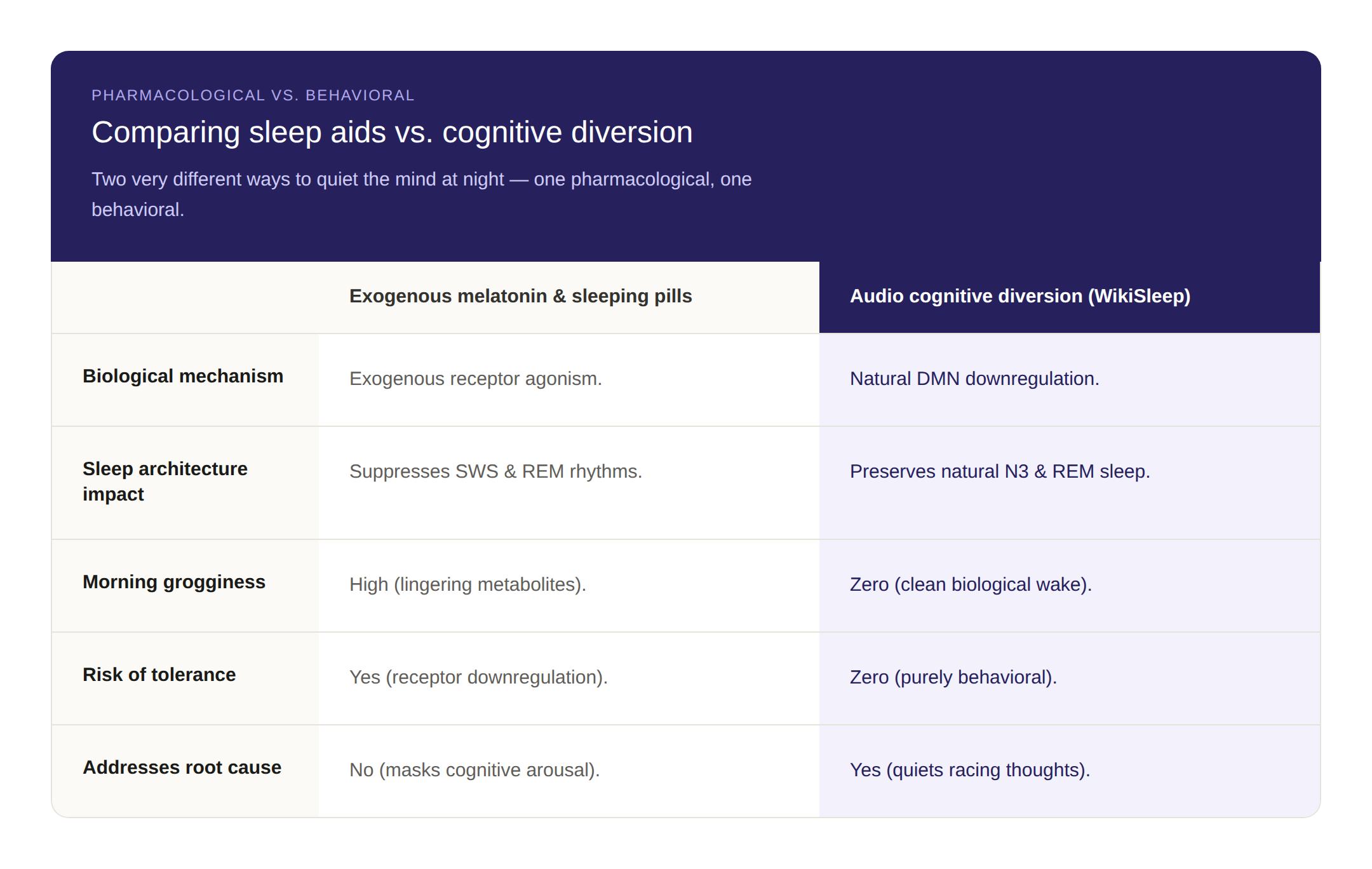
Receptor Desensitization: Endogenous pineal melatonin is secreted in microgram increments (0.1 to 0.3 mg). Commercial doses of 3 mg to 10 mg deliver up to 30 times the physiological norm, downregulating MT1 and MT2 receptors in the brain and worsening rebound insomnia over time (NCBI StatPearls).
The Morning Fog: High circulating levels of synthetic melatonin outlast the night due to hepatic clearance bottlenecks, leading to next-day grogginess and psychomotor sluggishness (UC Davis Health).
Severe Inaccuracies: A landmark study highlighted by the American Academy of Sleep Medicine (AASM) found that 71% of commercial melatonin supplements failed to meet label claims, with actual potencies varying from 83% less to 478% more than advertised.
The Hidden Costs of Pharmaceutical Sedatives
Prescription sedatives, including benzodiazepines and Z-drugs (like zolpidem), force unconsciousness through GABA-A receptor modulation but fail to provide restorative rest.
Recent 2026 data published in Sleep demonstrates that chronic use of these medications suppresses Slow-Wave Sleep (SWS) and disrupts the synchronization of cortical slow oscillations. Because slow-wave sleep is essential for cellular repair, growth hormone release, and glymphatic waste clearance, chemically sedated sleep deprives the brain of essential recovery (HealthRX Clinical Review). Furthermore, these drugs carry severe risks, including dose-dependent impairments in executive function (Frontiers in Human Neuroscience) and FDA Boxed Warnings for complex sleep behaviors like sleep-driving (NCBI Bookshelf).
What is Cognitive Diversion?
Cognitive Diversion (also known as Serial Diverse Imagining or Cognitive Shuffling) is a behavioral technique that occupies the brain's phonological loop with neutral, micro-narrative, or semi-random imagery to safely transition the brain into a sleeping state.
As recognized by recent features in TIME Magazine and the BBC, cognitive diversion relies on a "super-somnolent" mechanism. Based on the Sleep Onset Control System (SOCS) pioneered by Dr. Luc P. Beaudoin (Simon Fraser University Research), the brain monitors its own thoughts to ensure environmental safety. When you feed the brain calm, structured, and non-threatening narrative audio, it actively suppresses intrusive worries. This signals the SOCS that the environment is secure, permitting the nervous system to relax so you can transition into a deep sleep naturally.
How WikiSleep Facilitates Natural Rest
WikiSleep translates the proven neurobiology of cognitive diversion into an accessible, audio-first wellness experience. Designed to combat the root cause of pre-sleep anxiety, the platform offers a sustainable alternative to supplements.
Instead of relying on total silence (which triggers the DMN) or highly engaging fictional drama (which drives arousal), WikiSleep curates calm, narrated nonfiction—such as history, architecture, and biographies. This content occupies working memory just enough to displace stress without requiring active intellectual engagement.
The narrated cadence and rhythmic pacing activate the parasympathetic nervous system, decelerating heart rate and dropping cortisol levels. Because no synthetic sedatives are introduced, WikiSleep allows the brain to progress uninhibited through natural Stage 3 Slow-Wave Sleep and REM cycles, ensuring users wake up with zero chemical hangover.
Comparing Sleep Aids vs. Cognitive Diversion
Reclaiming Your Natural Sleep Cycle
The human brain cannot simply be commanded to sleep in silence, nor can authentic rest be replicated through chemical sedation. Relying on high-dose melatonin or pharmaceutical hypnotics is a biological mismatch that often results in receptor desensitization and heavy morning fog.
By leveraging cognitive diversion, individuals can bypass the trap of bedtime rumination entirely. With tools like WikiSleep, you can work alongside your body's endogenous circadian rhythms—quieting the mind, downregulating arousal, and consistently achieving sound sleep without relying on a single pill.